Showing posts with label maritime. Show all posts

Wednesday, July 31, 2019

Black Tot Day

Today (31 July) is Black Tot Day. 

On this day 49 years ago – on 31 July 1970 – the last Rum Rations were served to sailors – so this day was observed as Black Tot Day 

On 31 July 1970  the Royal Navy Stopped the Daily Tot of Rum for all serving Naval Personnel. 
This Naval Tradition had been around since 1667. 
It was a sad day for sailors. 
On December 17, 1969 the Admiralty Board issued a written answer to a question from the MP for Woolwich East, Christopher Mayhew saying: 
"The Admiralty Board concludes that the rum issue is no longer compatible with the high standards of efficiency required now that the individual's tasks in ships are concerned with complex, and often delicate, machinery and systems on the correct functioning of which people's lives may depend". 
This led to a debate in the House of Commons on the evening of January 28, 1970, now referred to as the 'Great Rum Debate', started by James Wellbeloved, MP for Erith and Crayford, who believed that the rum ration should not be removed. 
The debate lasted an hour and 15 minutes and closed at 10:29 PM with a decision that the rum ration was no longer appropriate.
July 31, 1970 was the final day of the rum ration and it was poured as usual at 6 bells in the forenoon watch (11 AM) after the pipe of 'up spirits'
Some sailors wore black armbands, tots were 'buried at sea' and in one Navy Stone Frigate (Shore Based Training Establishment), HMS Collingwood, the Royal Naval Electrical College at Fareham in Hampshire there was a mock funeral procession complete with black coffin and accompanying drummers and piper. 
The move was not popular with the ratings despite an extra can of beer being added to the daily rations in compensation. 

Dear Reader: 

If you want to know more about the genesis and history of Rum Rations in the Navy, please read my article on Rum Rations in the Navy at url: https://karve.wordpress.com/2019/05/16/rum-grog-a-sailors-drink/ 


Wish you a sober Black Tot Day.


Wednesday, June 26, 2019

Humor in Uniform – Scuttlebutt


Humor in Uniform 

Disclaimer: 
This story is a fictional spoof, satire, pure fiction, just for fun and humor, no offence is meant to anyone, so take it with a pinch of salt and have a laugh.

SCUTTLEBUTT
A Fictional Spoof  
By
VIKRAM KARVE

The TASO sidled up drunkenly towards me and said to me: “I’ll tell you something – but – you must keep it to yourself…”

[The “TAS Officer” aka TASO (Torpedo Anti-Submarine Officer) – he was the senior-most “in-living” officer.

With our penchant for changing names – and – in consonance with the increasing “Americanization” of our Naval Culture – TASO was later re-designated as ASWO (Anti-Submarine Warfare Officer)…]

Dear Reader – this story happened 42 years ago – in the 1970’s – when I was serving on a frontline warship of the western fleet.

After a long sailing exercise – we had returned to our base port Mumbai (it was called Bombay those days).

It was the first day of the monsoon – and – it was raining heavily.

The TASO had returned from leave from New Delhi (his hometown).

Normally – the “Deluxe” arrived at Bombay Central (Mumbai Central) at 5 PM – but today – due the heavy rains – the train had arrived 5 hours late- and by the time the TASO had reached our ship berthed in the Dockyard – it was past 11 PM.

I called the “Duty Steward” – I told him to open the Wardroom Bar – and I told him to fry some “Luncheon Meat” as “Small Eats” for the hungry TASO.

(Well – things may be different today – people may be sticky about bar and meal timings – but those days – we treated our ship’s wardroom as our home – and – things were quite informal and comfortable – especially for officers)

The TASO had a bath and arrived in the Wardroom.

I smiled at the TASO.

He smiled back.

The TASO was a good guy – and – despite the fact that he was 5 years senior to me in the rank of Lieutenant – we were good friends.

(Those days – in the 1970’s – after being commissioned as an Officer in the Navy – it took you 3 years to become a Lieutenant – and then – you remained a Lieutenant for 8 long years – before being promoted to the rank of Lieutenant Commander – after a total of 11 years of commissioned service.

Today – you see “greenhorns” – who haven’t yet fully grown their whiskers – strutting around wearing “two and a half stripes” of a Lieutenant Commander – after just 6 years of commissioned service – thanks to the benevolent Ajai Vikram Singh Cadre Review Report aka AVS 2006 – which has reduced the value of senior ranks to subaltern status…)

The Duty Steward placed the plate of Luncheon Meat in front of us.

The Steward asked the TASO: “Sir – would you like a drink…?”

“Take out a bottle of whisky – fill up the ice box – keep a jug of water – and give me the keys to the fridge – in case we want soda or something else…” the TASO said to the Steward.

“Aye Aye, Sir…” the Steward said, “should I tell the cook to make some dinner for you…?”

“No. This Luncheon Meat should be enough. You can secure…” the TASO said to the Steward.

“Thank you, Sir…” the Steward said – he kept everything on the table as instructed – gave us the keys to the fridge – and went away.

We – the TASO and I – we started drinking.

“Sir – did you visit DOP…?” I asked the TASO.

“Of course I visited DOP – that’s the advantage if your home station in Delhi – you can make your “pilgrimage” to DOP at least once a year – maybe twice – when you go on leave…” the TASO said.

(DOP is “Director of Personnel” at Naval Headquarters – who looks after appointments and transfers)

“Sir – any news…?” I asked the TASO.

“I’ll tell you something – but – you must keep it to yourself…” the TASO said.

“Of course, Sir…” I said.

“Our “Old Man” is going on transfer…”

“What…? Our Captain is going on transfer…? So suddenly…?”

“Yes – most unexpected – his normal tenure was for another 6 months at least – but they are pulling him out urgently for a diplomatic assignment…”

“Diplomatic Assignment…? Our Captain is going as NA…?”

“Yes – Naval Attaché – to one of the best countries – a most prestigious appointment.”

“We didn’t know anything about this…”

“No one knew. It happened quite suddenly – just last week. The guy who was supposed to go – he had a severe car accident and is hospitalized with his legs and bones all broken – he will take a long time to be medically fit – so – our boss was chosen…”

“Does our “Old Man” know…? He didn’t say anything…”

“I am sure he knows – but he must be keeping it to himself till everything comes in black and white…”

“Are you sure, Sir…? I asked the TASO.

“Of course I am sure…” the TASO said, “the DOP told me all this in strict confidence. You know how close I am to the DOP, don’t you…?”

“Yes, Sir – you told me that he is your uncle…”

“He is not my uncle – his wife is related to me – she is my cousin sister…”

“Oh…” I said, “Sir – any idea who is the new Captain…?”

“That’s the bad news…”

“Bad news…?”

The TASO looked at me – and he said with a wicked smile: “Brace yourself – our new Captain is going to be “Bum Bandit”…”

“Shit…! “Bum Bandit”…? Are you sure, Sir…?” I asked the TASO.

“100% sure – the DOP told me himself…”

“I thought “Bum Bandit” was “dry listed”…”

“He pulled some high-level strings and got himself “wet listed”…”

“But why our ship…?”

“The first vacancy – our bad luck…”

“So – it’s bad days ahead…”

“Yes – this “Bum Bandit” bugger has a terrible reputation – he is a bloody sadist – he screws the hell out of everyone – literally and figuratively. And just imagine – the bugger is a confirmed bachelor – so – he will be staying on board even in harbour – so our life will be hell 24/7…”

“Hopefully – he will get his own “fags” and “peg boys”…”

“He wanted to – but DOP refused – no crew change…”

“Then – we better steer clear and cover our backsides…”

“Don’t worry – there are plenty of “Sea Dolls” on board for “Bum Bandit” to target…”

“Anyway – we are in for a tough time. We will really miss our “Old Man” – he was a good Captain who ran a happy ship…” 

“He will be leaving next week – the official letter may be issued tomorrow…?

“That’s sad…” I said.

“Let’s kill the bottle and go to sleep…” the TASO said.

So – we polished off the remains of the whisky and hit our bunks.

NEXT MORNING

We were enjoying a hearty Navy style “English” breakfast of porridge, bacon and eggs, sausages, ham, salami etc – when the Captain’s “Doggy” entered the wardroom – he looked at the TASO and said: “Sir – Captain’s Compliments…”

“Now…?” the TASO asked the Captain’s “Doggy”.

“After “Both Watches”, Sir…” the Captain’s “Doggy” said – then he looked at me and said: “You too, Sir…”

30 minutes later – we knocked on the Captain’s Cabin.

“Come in…” the Captain shouted from inside.

We entered – and saluted the Captain.

The Captain shouted at us: “What’s this bloody bilge you are spreading around…?”

We remained silent.

The Captain looked at the TASO and said: “Well – I would love to go on a diplomatic assignment – but – I am going nowhere – I am here to stay as your Captain – whether you like it or not…”

“Sir – we wanted to expose your “spy” in the wardroom…” the TASO said.

“What…? “Spy” in the Wardroom…?” the Captain said.

“Yes, Sir – you seem to know everything that goes on in the wardroom – so we knew you that had a “spy” who was ratting on us…” I said.

“And you have found out who my “spy” is…?” the Captain said.

“Yes, Sir – “Cute Boy” – he was the only other person in the wardroom last night – sitting quietly in the corner watching the late night movie on TV…” the TASO said.

“He was the bloody OOD – it is his job to report things to me…”

“Sir – is he supposed to eavesdrop and come squealing to you…?”

“Shut up…” the Captain said, “Anyway – you buggers leave him alone – he was terrified when he heard the name of the new “Captain” who was going to replace me…”

“Terrified…?”

“You know what happened to him when he was a “Snotty” – don’t you…?”

“No, Sir…”

“I’ll tell you sometime…” the Captain said, “I had half a mind to “log” you buggers – but I’ll let it go this time. Now – stop your bloody antics and get on with your jobs…”

“Aye Aye, Captain…” we said.

Then – we saluted and beat a hasty retreat. 

VIKRAM KARVE
Copyright © Vikram Karve 
1. If you share this post, please give due credit to the author Vikram Karve
2. Please DO NOT PLAGIARIZE. Please DO NOT Cut/Copy/Paste this post
© vikram karve., all rights reserved.

Disclaimer:
1. This story is a fictional spoof, satire, pure fiction, just for fun and humor, no offence is meant to anyone, so take it with a pinch of salt and have a laugh. 
2. All Stories in this Blog are a work of fiction. Events, Places, Settings and Incidents narrated in the stories are a figment of my imagination. The characters do not exist and are purely imaginary. Any resemblance to persons, living or dead, is purely coincidental.

Copyright Notice:
No part of this Blog may be reproduced or utilized in any form or by any means, electronic or mechanical including photocopying or by any information storage and retrieval system, without permission in writing from the Blog Author Vikram Karve who holds the copyright.

Copyright © Vikram Karve (all rights reserved)

Thursday, December 13, 2018

Torpedoed Sunk and Rescued – Three Times in One Hour

BELIEVE IT OR NOT

TORPEDOED SUNK AND RESCUED AT SEA – 3 TIMES IN ONE HOUR  
True Story from World War 1
Retold By
VIKRAM KARVE

Dear Reader: Here is an incredible Navy Story from World War 1

Date: 22 September 1914
Place: North Sea (Atlantic Ocean)
Protagonist: Royal Navy Midshipman WH “Kit” Wykeham-Musgrave (Age 15 Years)

On 22 September 1914 – three Royal Navy Cruisers (of the “Cressy” Class) – HMS Aboukir, HMS Hogue and HMS Cressy – were on patrol in the North Sea when they were discovered by the German Submarine (U-Boat) U9. The German Submarine torpedoed and sank the three ships one by one within a time-span of one hour.

WH “Kit” Wykeham-Musgrave was a Naval Cadet who had just completed his first term at Royal Naval College, Dartmouth. On mobilization for war – he was sent to the fleet (along with his fellow cadets). He was appointed to HMS Aboukir as Midshipman.

When HMS Aboukir was torpedoed – he managed to get off and swim to HMS Hogue.

When HMS Hogue was sunk – he escaped to HMS Cressy.

When HMS Cressy went down – he found himself swimming for his life once again.

All this happened within one hour.

Eventually – after around three hours in water – he was rescued by a Dutch Trawler.  

FIRST SINKING – HMS ABOUKIR

Early in the morning on 22 September 1914 – the German submarine U9 (Commanded by Captain Otto Weddigen) spotted HMS Cressy, HMS Aboukir and HMS Hogue going at a modest speed and failing to zigzag, the classic avoidance technique even at this date for submarine attacks.

At 0625 Hrs (6:25 AM) – the German Submarine torpedoed and sank HMS Aboukir.

Midshipman WH “Kit” Wykeham-Musgrave was serving on HMS Aboukir. Here is an account of his ship being torpedoed in his words:

“…We were streaming line ahead with a distance of three miles between the ships. We (HMS Aboukir) were struck first. I was sleeping below at that time. We were woken up by a terrific crash and the whole ship shook and all the crockery in the pantry fell… we rushed up on deck…she (the ship) then started to list heavily. By that time (HMS) Cressy and Hogue had arrived and had let down their boats. The Aboukir went down suddenly and we slid down her side into the water. Fortunately – there was not a great deal of suction on the side we had jumped off – so with some difficulty – we got clear. I swam to the Hogue…”

SECOND SINKING – HMS HOGUE  

At 0700 Hrs (7 AM) – the German Submarine (U9) torpedoed and sank HMS Hogue (while it was trying to rescue survivors from Aboukir). U9 shot two torpedoes – both hits – and Hogue sank in 3 minutes.

In the words of Midshipman WH “Kit” Wykeham-Musgrave:

“…I swam to the Hogue and was just going on board when she was struck and sank in three minutes. I then swam to the Cressy…”

THIRD SINKING – HMS CRESSY

At 0720 Hrs (7:20 AM) – the German Submarine (U9) shot two torpedoes at Cressy (one of which hit). U9 then shot a third torpedo to sink the struggling Cressy.

Midshipman WH “Kit” Wykeham-Musgrave writes:

“… (after Hogue was sunk ) I swam to the Cressy where I was hauled up the side with a rope. I went down to the Sick Bay where I had a cup of cocoa – but directly I had finished – she (Cressy) was struck also – and we were forced to go up on deck again. We sat on the fo’c’sle and we saw a submarine come as close as 200 or 300 yards off and we fired all the guns at her until we sank. I jumped off again and got clear – and after swimming for a long time – I found a plank to hang on to. I hung on to it – until I was picked up having been three hours in water. I don’t remember being picked up as I was unconscious. But – I woke up in the trawler Titan which was Dutch…(Later)…We were taken off on a destroyer called the Lucifer which took us to Harwich…”

He concludes: “It was a perfect miracle how I was saved since only 50 out of 800 of our crew were saved…”

(From the three ships which were torpedoed and sunk – – HMS Aboukir, HMS Hogue and HMS Cressy – of the 2296 men on board the three vessels – only 837 were rescued)

Among the 1500 who lost their lives were around a score (20) of young Midshipmen of Wykeham-Musgrave’s age (15) – “Winston’s Water Babies” – as they were dubbed – with more than a hint of criticism of the First Lord of the Admiralty (Winston Churchill) rashness in allowing so many young lives to be put at risk.

As far as Midshipman Wykeham-Musgrave was concerned – his later Naval Career was more fortunate – he rose to the rank of Lieutenant Commander – and survived till the age of 90.

Midshipman WH “Kit” Wykeham-Musgrave must surely be one of the luckiest men in the Royal Navy in World War One (WW1) – torpedoed and sunk 3 times in one hour – on 3 different ships – yet he survived.

References:
1. The Imperial War Museum Book of the First World War (pp 93-94)
2. Bizarre History Blog Sunk Three Times in an Hour

VIKRAM KARVE
Copyright © Vikram Karve
1. If you share this post, please give due credit to the author Vikram Karve
2. Please DO NOT PLAGIARIZE. Please DO NOT Cut/Copy/Paste this post
© vikram karve., all rights reserved.

Friday, November 2, 2018

Navy Customs and Traditions – Part 1 – “Impressment” – “Press Gang” – “Shanghai”

IMPRESSMENT  “PRESS GANG – “SHANGHAI”
Navy Customs and Traditions – Part 1
By
VIKRAM KARVE

IMPRESSMENT – “PRESSING” MEN INTO NAVAL SERVICE

Impressment means forcing men into Naval Service by compulsion.

Colloquially – Impressment – the practice of “pressing” men into Naval Service – was also called “Press Gang” or “Shanghai”.

In the 16th 17th and 18th Centuries (the era of Sailing Ships) – in order to explore the world and create colonies all over the world – European Nations developed powerful Navies with large number of Ships.

Those days – on age of sail – working conditions for Sailors were harsh and life was dangerous.

So – most citizens were unwilling to work on ships as sailors – resulting in a shortage of crew on ships.

Navies of several nations used forced recruitment by various means.

The large size of the British Royal Navy in the Age of Sail resulted in impressment being most commonly associated with Britain.

Impressment practices included kidnapping and abducting men and putting them on board ships to serve as sailors by coercive techniques such as trickery, intimidation, violence, drugging, or by getting them drunk.  

Impressment was used by the Royal Navy since 1664 and during the 18th and early 19th centuries as a means of crewing warships.

In the early 18th century – impressment was given legal sanction.

Impressment – wherein the British Crown had the right to capture men and force them into Naval Service – was passed by Acts of British Parliament in 1703 – and later in 1705, 1740 and 1779.

All “eligible” men of between the ages of 18 and 55 years were liable to impressment to serve on ships.

Impressment relied on the legal power of the King to call men to Naval/Military Service – and – as far as citizens were concerned – the failure to allow oneself to be “pressed” into service was punishable by hanging – although the punishment became less severe over time.

IMPRESSMENT PROCEDURE – THE “IMPRESS SERVICE” aka “PRESS GANGS”

Impressment was implemented by the “Impress Service” (colloquially called the “Press Gang”).

Gangs of Thugs – called “Press Gangs” – were engaged to enforce impressment.

“Press Gangs” were paid handsomely.

These “Press Gangs” physically rounded up and captured men from Pubs, Markets and other public places – often at night. They also trapped unwilling people by defrauding them or getting them drunk.

The “captured” men were taken on board ship and locked up until the ship sailed out to sea.

These “captured” men who were “pressed” into service would be on the high seas by the time their absence was noticed ashore.

Some of these “pressed” sailors later died due to worsening of the injuries sustained during their capture while others succumbed to the dreaded disease “scurvy”.

Appearance of the dreaded “Press Gangs” in an area could force men to flee from there.

“Press Gangs” were most active in the 17th and 18th centuries – in fact – laws were passed as late as 1835 to uphold impressment.

Of course – all Naval Officers were “volunteers” – and – so were “key” Seamen like Warrant Officers, Boatswains (Bosuns), Ratings etc.  – and – there were a few “volunteer” Sailors too (who were paid a bounty upon joining) – but – most of the “lower deck” comprised “pressed” men.

At the time of the Battle of Trafalgar more than half the Royal Navy’s 120,000 sailors were “pressed” men.

The Royal Navy also impressed seamen from Merchant Ships at sea.

However – this was done by individual warships – rather than by the “Impress Service”.

The impressment of seamen from American Merchant Ships by Royal Navy Warships caused serious tensions between Britain and the United States in the years leading up to the War of 1812.

Though the public opposed “Impressment” – the practice of impressment was repeatedly upheld by the courts as it was deemed vital to the strength of the Navy – and – by extension – to the survival of the British influence and realm.

Although no Foreigner could normally be “pressed” into Naval Service – they lost their protection if they married a British woman – or had worked on a Merchant ship.

In some exceptional cases – the British Government protected certain men from “impressment”– by issuing “Protections” against impressment – which the “protected” men had to carry on their person at all times.

But – in times of crisis – the Admiralty would order a “Hot Press” – which meant that no-one remained exempt from “impressment”.

In due course – the practice of “Impressment” became increasingly unpopular with the British Public.

On occasions – local officials acted against “Press Gangs” – sometimes – to the point of imprisoning officers from the Impressment Service – or – opposing them by force of arms.

However – the practice of “impressment” continued.

At the time of the Battle of Trafalgar (1805) more than half the Royal Navy’s 120,000 sailors were “pressed” men.

After the defeat of Napoleon in 1814 – Britain ended the practice the practice of “Impressment”.

However – in lieu of “Impressment” – they started the practice of “conscription”.

And – the practice of “conscription” was not limited to the Royal Navy – but covered all Armed Forces.

SHANGHAIING

Whereas “Press Gang” refers specifically to impressment practices adopted by the British Royal Navy – the term “Shanghai” is more generic in nature applying to the Merchant Navy and Foreign Navies.

“Shanghaiing” means to take someone against his will for compulsory service – especially on board a ship.

To “Shanghai” someone is to kidnap or trick them into working for you.

The traditional way to “Shanghai” someone is to drug him and put him on a ship.

When the person wakes up – the ship is at sea – and he has no choice but to get to work.

The practice of “Shanghaiing” dates back to the 1800’s when all ships were Sailing Ships.

In Nautical Parlance – “Shanghai” means to enroll or obtain (a sailor) for the crew of a ship by unscrupulous means – as by force or the use of liquor or drugs.

The nautical term “To Shanghai” may have its origins in view of the fact that Shanghai (China) was the most common destination of merchant ships for which such abducted sailors were forcibly conscripted by unscrupulous methods to collect crews for ships sailing from England/America to Shanghai which was considered the most long, risky and difficult sea voyage for which it was difficult to assemble crews since sailors were not willing to sail for such and long, hard and dangerous voyage.

Ships needed crews – but working conditions on ships were so bad that crews were often obtained by trickery, bribery, force and outright kidnapping – or by getting a man drunk till he passed out or by drugging him to sleep – and then – abducting him on board the ship. When the man woke up after a few hours the ship would be sailing on the high seas – and the hapless “Shanghaied” sailor could do nothing except complete the voyage.

The Captain of a ship would “shanghai” people when his ship was short of sailors.

The “shanghaied” person would wake up and find himself at sea – often on a long trip like to Shanghai, China.

“Shanghaiing” was made possible by the existence of Boarding Masters (aka “Crimps”) – whose job was to find crews for ships.

Boarding Masters were paid “by the body”.

So – Boarding Masters had a strong incentive to place as many “Sailors” on ships as possible.

This “Pay” was called “Blood Money”.

The most straightforward method for a “Crimp” to “shanghai” a sailor – was – to render him unconscious by getting him drunk – forge his signature on the ship’s papers – put the “shanghaied” sailor on the ship – and – pick up his “Blood Money”.  

Though nautical in origin – over the years – the meaning of the term “shanghai” has since become more generic.

Today – in broad terms – the word “Shanghai” means to induce or compel someone to do something by trickery.

The term “Shanghai” is also used for Non-Naval “abductions”.  

For example – if you trick your best friend into coming home with you so she can do your chores – you “Shanghai” her. 

EPILOGUE

In countries like India – due to huge population and rampant unemployment – you will always have plenty of “volunteers” seeking jobs as sailors in the Navy – so – there will be no need for stratagems like “impressment”, “press gang” and “shanghaiing”.

On the other hand – those nations which face a shortage of “volunteers” for military/naval service – these nations may have to resort to “conscription” – albeit – not the “Press Gang” type of “Impressment” which may not be acceptable in the “Human Rights” standards of today. 

VIKRAM KARVE
Copyright © Vikram Karve 
1. If you share this post, please give due credit to the author Vikram Karve
2. Please DO NOT PLAGIARIZE. Please DO NOT Cut/Copy/Paste this post
© vikram karve., all rights reserved. 

Disclaimer:
1. This story is a spoof, satire, pure fiction, just for fun and humor, no offence is meant to anyone, so take it with a pinch of salt and have a laugh.
2. This story is a work of fiction. Events, Places, Settings and Incidents narrated in the story is a figment of my imagination. The characters do not exist and are purely imaginary. Any resemblance to persons, living or dead, is purely coincidental.

Copyright Notice:
No part of this Blog may be reproduced or utilized in any form or by any means, electronic or mechanical including photocopying or by any information storage and retrieval system, without permission in writing from the Blog Author Vikram Karve who holds the copyright.

Copyright © Vikram Karve (all rights reserved)

Tuesday, March 22, 2016

Auckland War Memorial Museum : Military Heritage of New Zealand

AUCKLAND WAR MEMORIAL MUSEUM 
Impressive Display of the Military Heritage of New Zealand 
A Travelogue
By
VIKRAM KARVE 

MUSINGS ON MILITARY MUSEUMS

India’s first Aircraft Carrier INS Vikrant was decommissioned in 1997 – and – as a fitting tribute to the warship’s yeoman’s service to the nation – it was decided to preserve INS Vikrant as a “Museum Ship” based in Mumbai.

Accordingly – INS Vikrant was converted into a Naval Museum Ship IMS (Indian Museum Ship) Vikrant.

The Museum Ship was very well conceived – the Indian Navy put in a lot of effort – and IMS Vikrant had a fascinating display of Naval Artifacts.

This interesting “afloat” Navy Museum had an added novelty of being on a famous ship – and this tribute to Naval Heritage attracted many visitors – despite not being easily accessible due to the security restrictions.

It was proposed to anchor this floating Navy Museum off Mumbai harbour to make it a top attraction to citizens, visitors and tourists.

However – all these noble plans never materialized – and – after a few years – the Navy Museum was dismantled – and the grand old ship INS Vikrant was scrapped.

Sadly – our Politicians and Civilian Citizens do not seem to be interested in preserving our military heritage – despite the fact that – India has fought major wars – and our Military Forces are in a constant state of combat – continuously engaged in counter-insurgency operations and action against militants/terrorists.

In contrast - even a small peaceful country like New Zealand has impressive War Memorials and Military Museums – to commemorate the few wars and peacekeeping missions in which its citizens participated  mostly overseas.

The remarkable Military Museums in New Zealand are prominent landmarks and top attractions – for citizens and visitors.

For example – if you open any visitor guide or tourism brochure – you will see that the magnificent Auckland War Memorial Museum is highlighted as a top sightseeing attraction.

Other Military Museums like the New Zealand Maritime Museum, Torpedo Bay Navy Museum and Aviation Display (at MOTAT) are hyped as “must see” sightseeing attractions in Auckland and figure prominently on all visitor guides and tourist itineraries – and so is the case with the Air Force Museum of New Zealand at Christchurch (which I missed seeing since I was in Christchurch on Christmas Day – the only day of the year on which the museum is closed) – and all the other Military Museums at various places in New Zealand.

The general public is well-informed of these Military Museums – and any tourist visiting New Zealand will be made aware and encouraged to visit these museums.

By the way – there are number of good Military Museums in India too – created in a piecemeal manner at various military locations  but – unfortunately – most civilians are not aware of these museums.

For example – let me ask you: “Have you visited Goa?”

If so – you must have visited the excellent beaches and other attractions in Goa.

But – are you aware that there is an impressive Naval Aviation Museum in Goa?

Does this Navy Museum figure prominently in any visitor guide or tourist itinerary?

Similarly – there are Military Museums (created by the Army, Navy and Air Force) at various places in India – in New Delhi, Ahmednagar, Jaisalmer, Port Blair, Pune – and maybe in a few other places – but – is the civilian public aware of these military museums – and are these military museums publicized as top tourist attractions?

Why is it – that there are many Military Museums in India – but most of these are unknown to civilian citizens and not easily accessible to the general public...?

This is just “food for thought” – shouldn’t we be proud of our military heritage as other nations rightly are?


AUCKLAND WAR MEMORIAL MUSEUM

Now – let me tell you a bit about the impressive Auckland War Memorial Museum – a magnificent structure with a superbly commanding presence as it stands tall and mighty atop the Auckland Domain in the heart of Auckland.

Auckland War Memorial Museum, one of New Zealand’s finest heritage buildings, stands on the hill known by Māori as Pukekawa.

The War Memorial Museum has occupied this site since 1929 when subscriptions raised by Aucklanders in remembrance of their war dead (in World War 1) enabled the construction of what is considered one of New Zealand’s best monuments.

After World War 2 – the Museum building was extended to encompass war memorials for the over 4000 Aucklanders who lost their lives in the Second World War – and to accommodate the ever-increasing artifacts in the Museum's collections.

The semicircular extension at the rear of the building was opened in 1960, providing more floor space and the World War 2 Hall of Memories which now also encompasses the names of those lost in subsequent peacekeeping missions and conflicts.


Auckland War Memorial Museum is a sacrosanct monument of remembrance for families and returned service personnel who wish to honor their loved ones and fallen comrades. 

This imposing neoclassical temple, capped with an impressive copper-and-glass dome, dominates the Auckland Domain and is a prominent part of the Auckland skyline, especially when viewed from the harbour.

The Auckland War Memorial Museum features a very interesting, informative and educative display of New Zealand’s heritage.

There a 3 levels:

1. People of the Pacific - which features artifacts and information about the pioneers who explored and settled down in New Zealand.

2. Stories of our Land and Sea - which has fascinating information about the geological origins and natural history of New Zealand before the advent of human settlers.

3. New Zealand War Stories - which is the most impressive section of the museum - comprises a fascinating display of the military heritage of New Zealand and highlights the gallant participation of New Zealanders in wars worldwide through history and their significant contribution to peacekeeping forces throughout the world. The Halls of Memory commemorate the supreme sacrifice of soldiers, sailors and airmen - and bear testimony to the rest respect and admiration the armed forces have in New Zealand.

This museum is so interesting that you must take out an entire day for seeing this impressive museum during your stay in Auckland New Zealand.

Here are a few photos I clicked during my visit to the Auckland War Memorial Museum on 31 December 2015.

Pictures of the Impressive War Museum


Auckland War Memorial Museum - Main (North) Entrance

Auckland War Memorial Museum - South Entrance

World War 1 - Hall of Memories


World War 2 - Hall of Memories

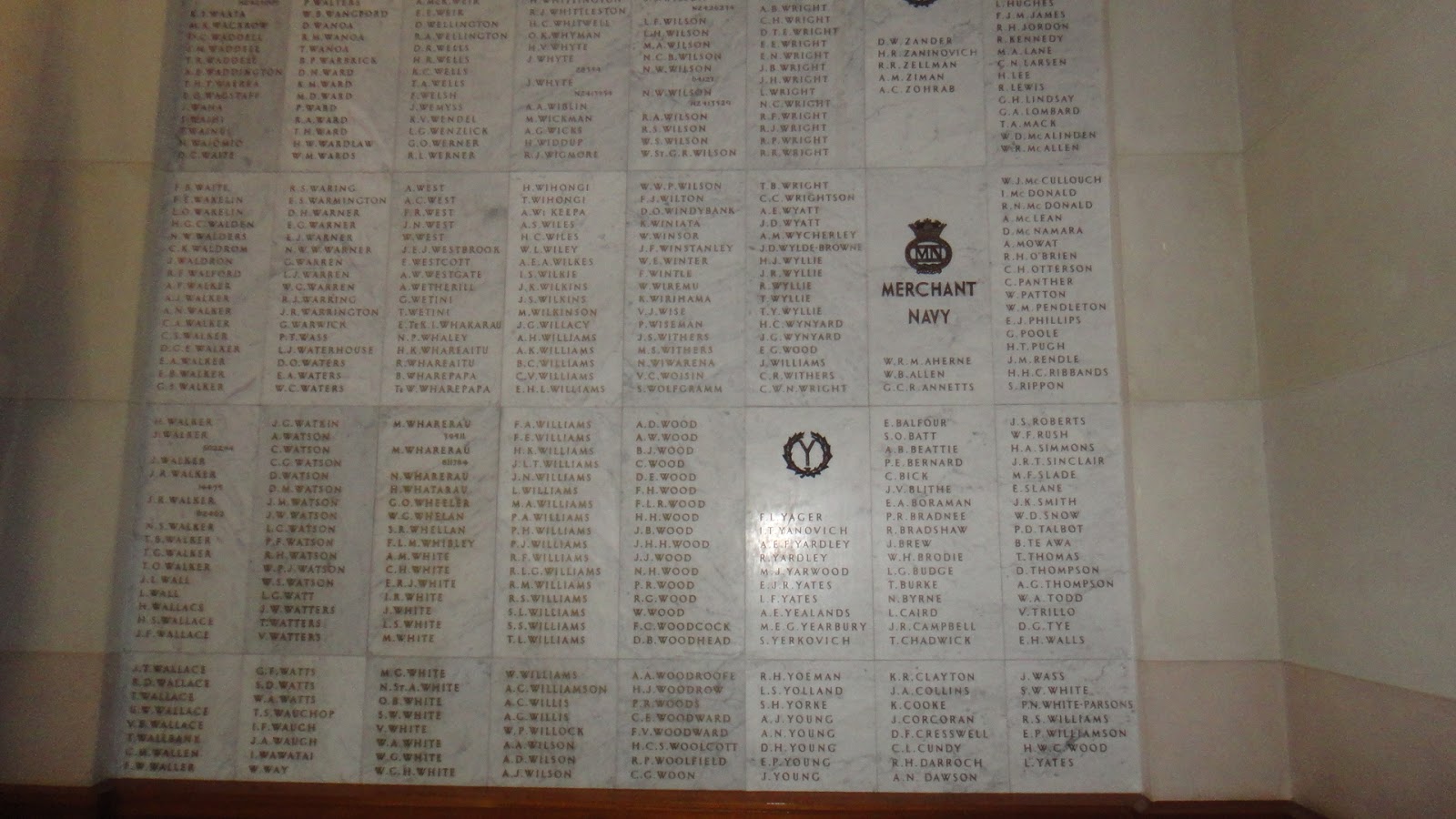
World War 2 - Remembrance Inscriptions and Record of Fallen

HMS Achilles Bell


Spitfire Fighter Aircraft - World War 2


Zero (Japanese) Fighter Aircraft - World War 2


Memorial Hall - World War 2


Navy Artifacts

Maori Wars Artifacts

Above and Below - Random Photos of Displays


View of South Entrance of Museum 

Instrument of Surrender with Japan - End of WW2

I could click very few photos since many displays were quite elaborate with subdued lighting and my smartphone battery ran out – but – I can say that this museum is the most impressive Military Museum I have seen so far. Indeed – the Auckland War Memorial Museum is one of the best museums I have ever visited. 

I hope India emulates New Zealand in this regard to commemorate the bravery and sacrifice of our military men in uniform – and we too create and proudly publicize similar impressive Military Museums in India to showcase our Military Heritage and inspire future generations – and build sublime War Memorials as a remembrance to martyred soldiers, sailors and airmen who perform the supreme sacrifice and lay down their lives for the nation. 

Most importantly – we must make these military museums easily accessible to the public and tourists. 

I have written this travelogue based on my own personal experience during my visit to the Auckland War Memorial Museum New Zealand on 31 December 2015 – and  of course – I have referred to the references cited below for cross-checking and background information. 

References: 


Auckland War Memorial Museum Website at url: https://www.aucklandmuseum.com/about-us/history-of-auckland-museum

However – all the photographs in the travelogue have been clicked by me on my smartphone. 

Dear Reader: Do let me know if you know of any Military Museums and War Memorials – and – hope you enjoyed the virtual tour of the Auckland War Memorial Museum New Zealand.

VIKRAM KARVE
Copyright © Vikram Karve 
1. If you share this post, please give due credit to the author Vikram Karve
2. Please DO NOT PLAGIARIZE. Please DO NOT Cut/Copy/Paste this post
© vikram karve., all rights reserved.

Copyright © Vikram Karve (all rights reserved)